
A Standard Fire Marshal Inspection Checklist
Unannounced inspections by your local fire marshal, or other Authority Having Jurisdiction (AHJ), are just part of doing business. You rarely get a courtesy call three days ahead asking if Tuesday at 2 PM works for you.
That means you need to stay inspection-ready year-round. Running your own checklist regularly keeps you compliant with fire codes, helps you avoid expensive fines, and protects your staff, property, and business from serious fire risks. A major violation can literally shut you down.
Staying prepared doesn't have to mean drowning in paperwork. Start a free trial of Forms On Fire and get a digital fire marshal inspection template you can customize for your facility.
Run it monthly, quarterly, or however often makes sense for your facility.
In this article, we'll cover what fire marshals typically look for during inspections, give you a ready-to-use template you can customize, and share practical tips to stay ahead of potential fire safety violations.
What does a fire marshal inspection checklist typically cover?
Fire marshal inspections aren't standardized across the US. What gets checked in your building depends on where you're located, what type of facility you're running, and which fire codes apply to you. A warehouse in Texas might face different requirements than a restaurant in California or an office building in New York.
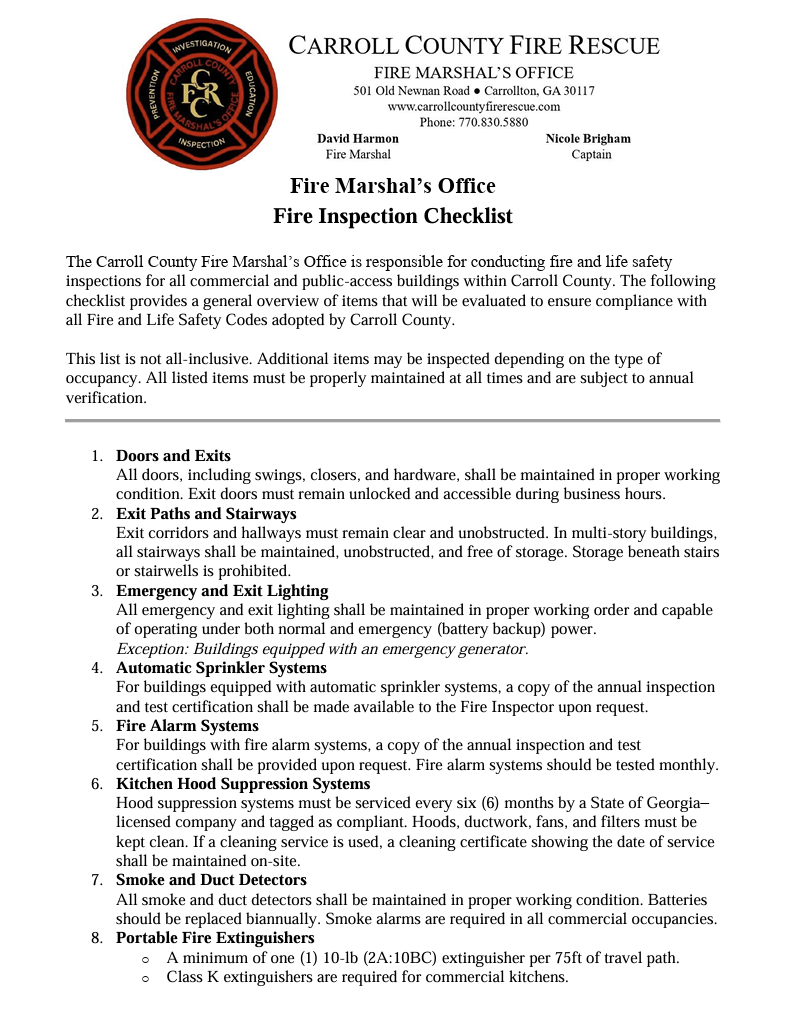
For example, the Carroll County Fire Marshal’s Office is in charge of performing fire and life safety inspections for all commercial and public buildings in Carroll County. To help their evaluees, they shared
a brief overview of the items they’ll review to make sure everything meets all the Fire and Life Safety Codes adopted by the county:
That said, most fire marshal inspections hit similar core areas. Here's what typically makes the list:
- Fire extinguishers: Are they mounted properly, charged, inspected within the last year, and easy to access? Fire marshals will check inspection tags and make sure extinguishers aren't blocked by boxes, equipment, or furniture. They'll also verify you've got the right type for the hazards in your space.
- Exit routes and emergency egress: Can people actually leave the building quickly? This covers exit doors that aren't locked from the inside, clear pathways without storage or equipment blocking the way, working exit signs, and emergency lighting that kicks on when the power goes out. If your emergency exit leads to a hallway jammed with filing cabinets, that's a problem.
- Fire doors and barriers: Are fire-rated doors closing properly, free of damage, and equipped with working hardware? Fire marshals look for propped-open doors, broken closers, gaps in seals, and anything else that would let smoke and flames spread when they shouldn't.
- Fire alarm and sprinkler systems: Is your fire alarm functional and tested regularly? Are sprinkler heads accessible and unobstructed? Fire marshals want to see maintenance records proving these critical systems get inspected and tested by qualified technicians.
- Flammable and combustible materials storage: Are hazardous materials stored safely and properly labeled? This covers everything from cleaning supplies to industrial chemicals. Fire marshals look for proper ventilation, separation from ignition sources, and appropriate storage cabinets or areas.
- Electrical safety: Are there overloaded outlets, extension cords used as permanent wiring, or damaged electrical equipment? Fire marshals flag anything that could spark a fire, including space heaters placed too close to combustible materials or messy electrical panels.
- Housekeeping and fire load: Is clutter under control? Excessive storage, especially combustible materials like cardboard boxes or paper, increases fire risk. Fire marshals look for good housekeeping practices and proper storage that doesn't create unnecessary fuel for a potential fire.
- Occupancy limits and capacity: Are occupancy limits clearly posted and accurate? Fire marshals verify that your building isn't exceeding safe capacity limits based on your exits, square footage, and building classification.
This is just a general overview. Your local fire marshal might have additional requirements based on your building type, occupancy classification, or specific local codes. Your best move is to get a copy of their checklist or inspection form and use that as your starting point.
An example of a fire marshal inspection checklist template for businesses
Fire marshal inspections do check the same core safety elements across most facilities. This template gives you a solid starting point.
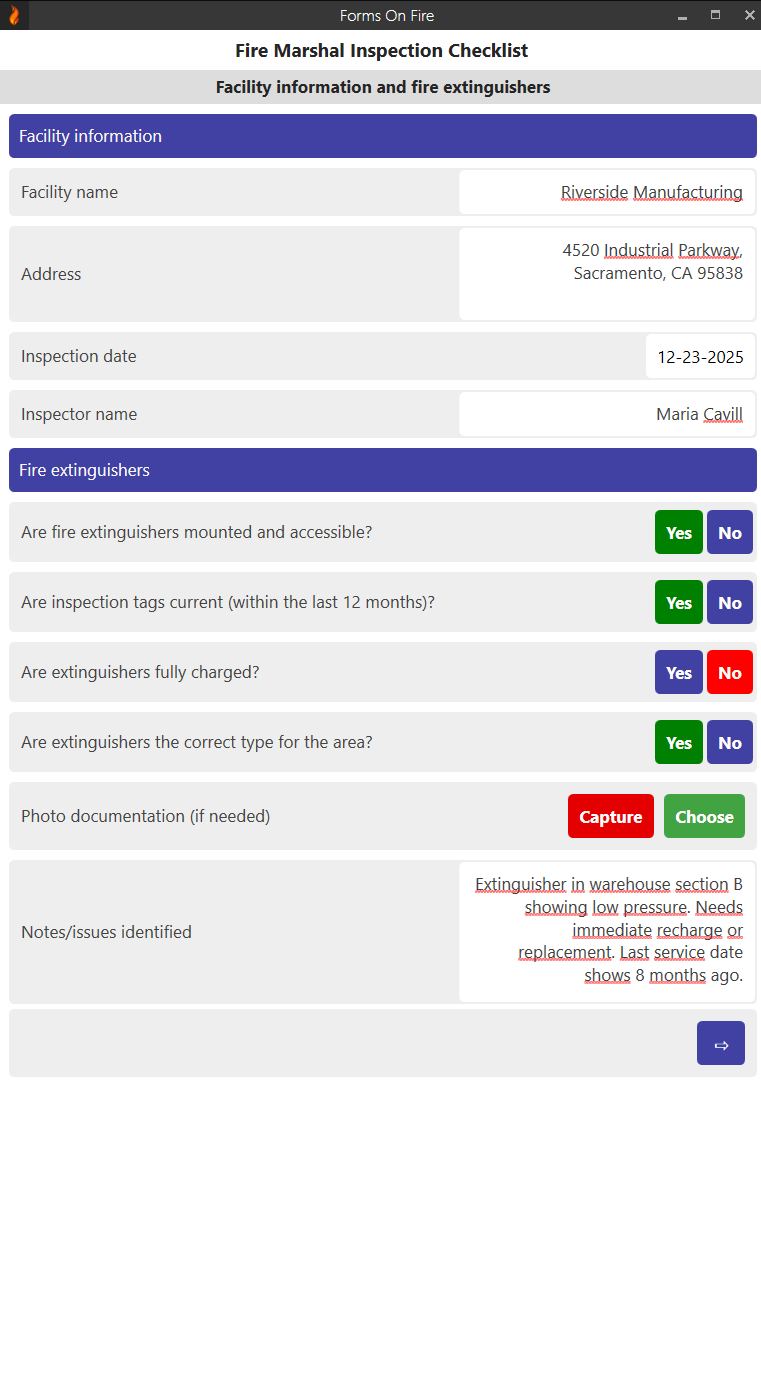
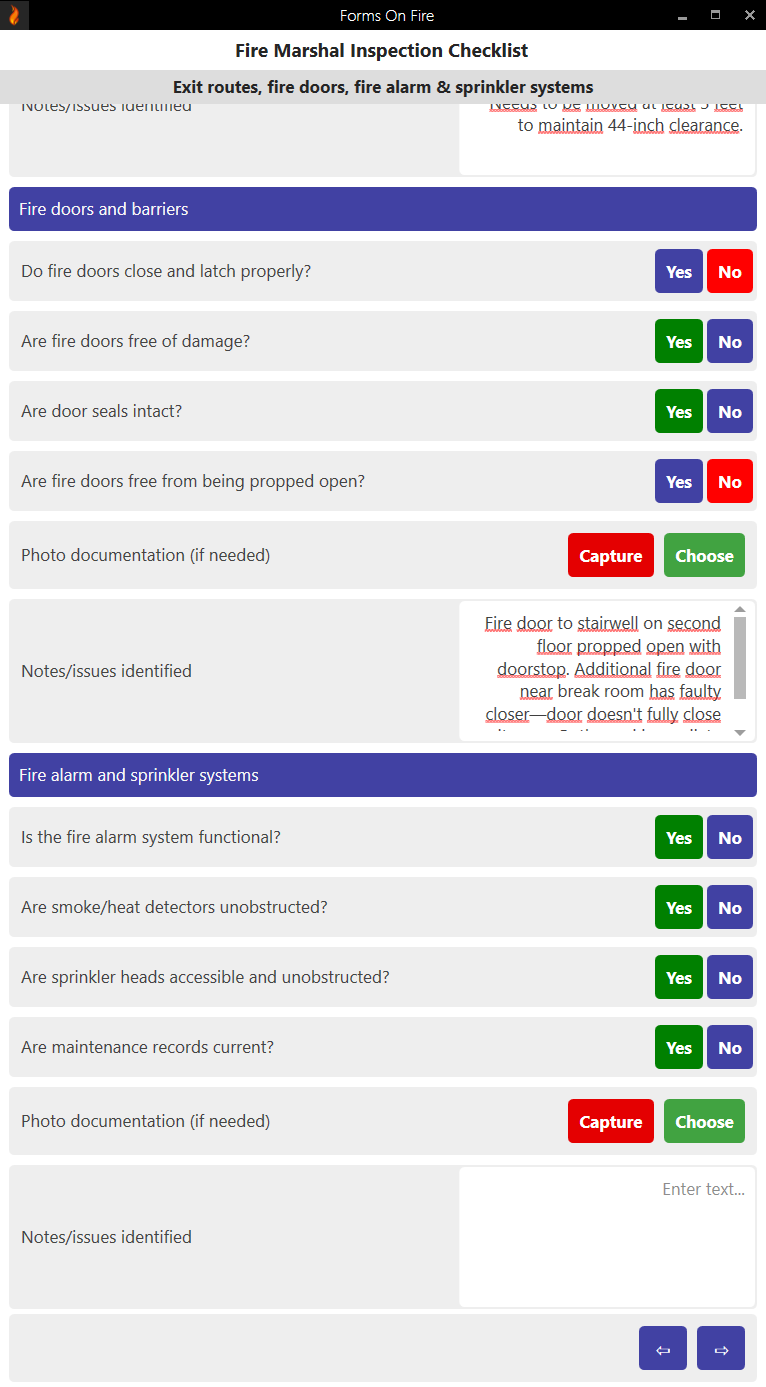
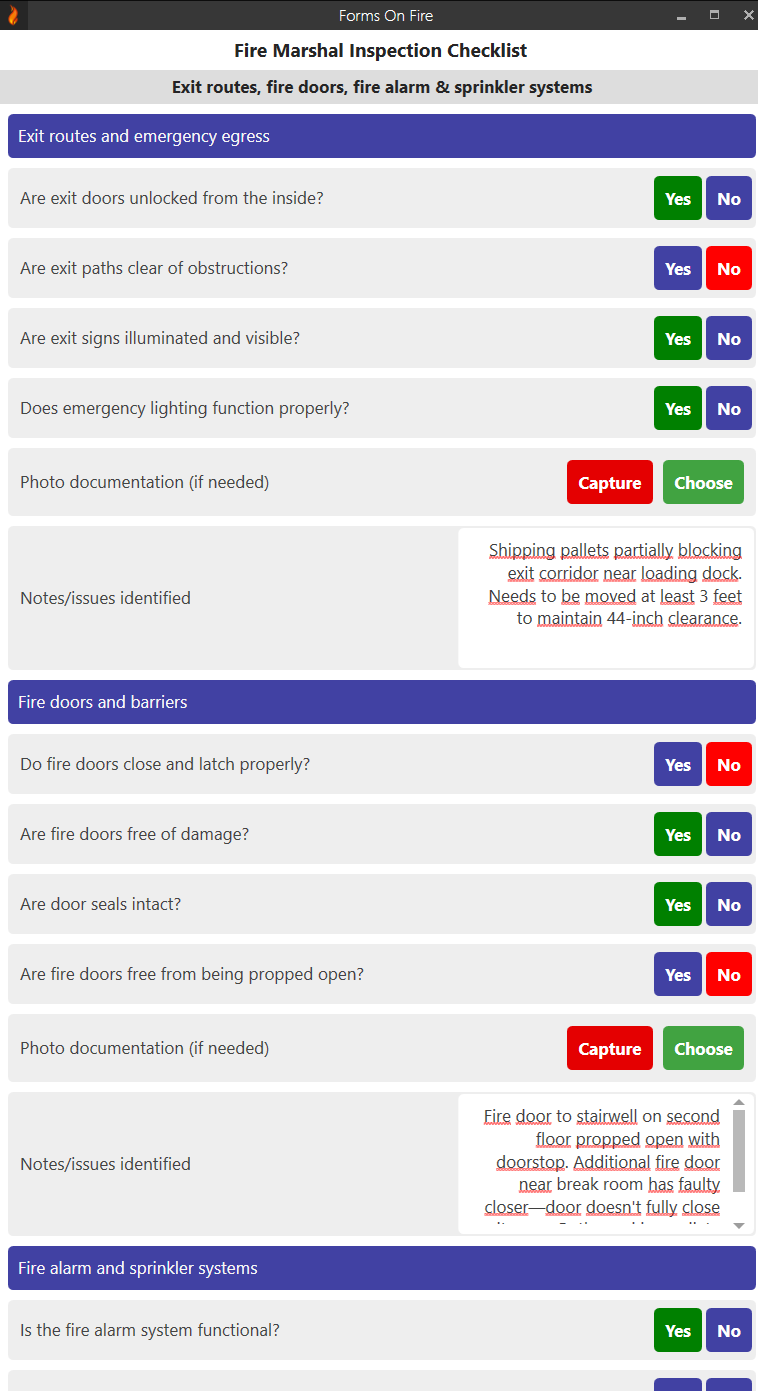
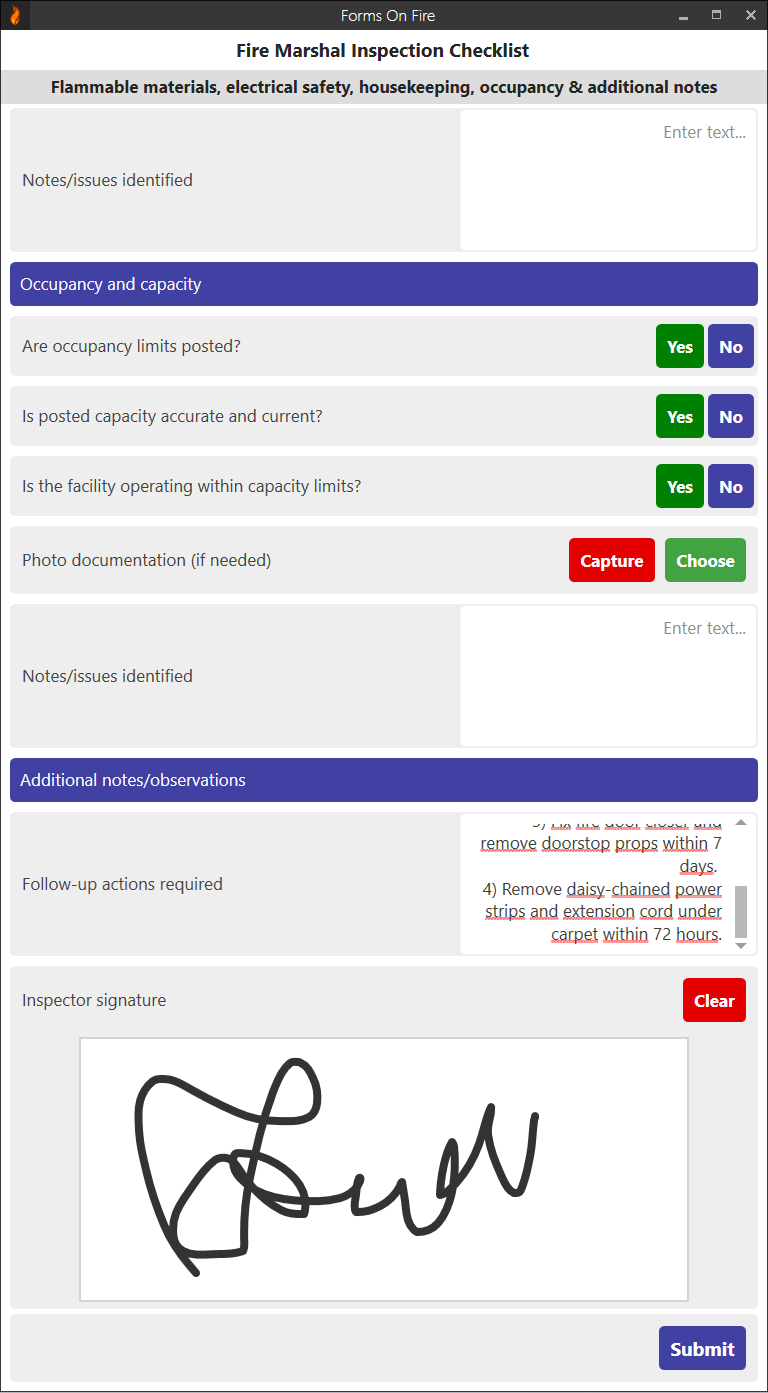
Use this template as your starting point, then customize based on your specific building type, local fire codes, and any requirements your Authority Having Jurisdiction (AHJ) has flagged in past inspections. Set corrective action deadlines based on the severity of issues found. Make it work for your operation, not someone else's.
Tips to prepare for a fire marshal inspection
Most fire marshal inspections check the same core things, which means you can get ahead of problems before an inspector ever shows up. Here's how to prepare:
- Walk through your building like you're the inspector: Grab a checklist and do a practice run. Look for blocked exits, missing extinguisher tags, propped doors, and clutter in egress paths. You'll catch most violations just by seeing your space through fresh eyes.
- Check your paper trail: Fire marshals love documentation. Pull your maintenance records for fire extinguishers, sprinkler systems, fire alarms, and emergency lighting. If inspection dates are overdue or records are missing, get those systems serviced now.
- Clear the clutter: That "temporary" stack of boxes near the exit has been there six months. Those extra chairs in the hallway are a fire hazard. Remove anything that blocks exits, obstructs fire doors, or sits too close to electrical panels and sprinkler heads.
- Test your equipment before they do: Hit the test buttons on exit signs and emergency lights. Make sure fire doors actually close and latch properly. Pull a fire alarm pull station (coordinate with your monitoring company first). If something's broken, you want to find out now.
- Fix the repeat offenders: Pull out your last inspection report and check what got flagged. Fire marshals often find the same violations year after year because nobody fixed the root cause. Propped doors? Overloaded outlets? Solve it properly this time.
- Organize your documentation: When the inspector asks for records, don't spend 20 minutes digging through filing cabinets. Keep everything in one place — maintenance logs, inspection certificates, occupancy permits, emergency plans. Digital is even better.
Treat preparation like an ongoing process. Stay on top of the basics year-round, and inspections will become less stressful.
Streamline fire safety inspections with Forms On Fire
Fire safety inspections aren't optional, but the headache around managing them is. Paper checklists get lost. Inspection reports sit in filing cabinets until someone needs them months later. Digital forms solve that.
With a digital fire marshal inspection checklist, you snap photos of violations right in the form, automatically timestamp every inspection, and generate reports instantly. Your team accesses the checklist from their phones or tablets, inspections happen more consistently, and you've got proof of compliance whenever you need it.
Forms On Fire makes this simple. Drag-and-drop form builder, offline functionality (inspect even without a signal), and automatic syncing when you're back online. Set up notifications so the right people know immediately when something needs attention.
Here's how to get started:
- Start a free trial: Sign up for Forms On Fire, no credit card needed.
- Grab the fire marshal inspection template: Find the Fire Marshal Inspection Checklist in our template library and customize it to match your facility and local codes. Drag-and-drop simple.
- Run a test inspection: Walk through one area with the form on your mobile phone. Adjust what feels clunky, then roll it out across your facility.
Plus, we have a whole bunch of other templates you might find useful, like:
- Fire Drill Checklist
- Monthly Fire Extinguisher Inspection Checklist
- Fire Risk Assessment Checklist
- Fire Safety Inspection Checklist
- Annual Fire Door Inspection Checklist and Report